Fall 2026 cohort is full · Spring 2027 cohort starts soon · See our Winter Camp, Dec 26–30 →
For Parents

The questions you are actually asking.

Most families arrive knowing almost nothing about fencing — that is normal, and it is not a disadvantage. Here are straight answers to what parents ask us first.

Is it safe?

This is the first question nearly every parent asks, and the answer surprises them: fencing has one of the lowest injury rates of any Olympic sport — safer by the numbers than soccer, basketball or gymnastics.

The reasons are structural. Fencers wear full protective equipment: a mask rated to withstand far more force than a blade can deliver, a padded jacket, an underarm protector, a glove. Blades are blunted and flexible, designed to bend rather than to penetrate. Contact is controlled, refereed, and stops the moment a touch lands.

The most common fencing injuries are the ordinary ones of any active sport — a rolled ankle, a strained muscle — and they come from footwork, not from blades.
Young fencers in full protective equipment at the salle
Full protective equipment, every fencer, every session.

What if my child isn't athletic?

Then fencing may be the best sport they will ever try. It is often called physical chess: bouts are decided by reading an opponent, disguising intention, and choosing a moment — not by size, reach or raw speed.

Some of the finest fencers we have taught were the children picked last in PE. Fencing rewards patience, pattern recognition and nerve, and it is one of the few sports where a thoughtful child can beat a faster one and understand exactly why.

It is also, importantly, an individual sport. No one is left on a bench, and no one lets down a team.

The smartest kid in the room has the advantage. That is the whole sport.
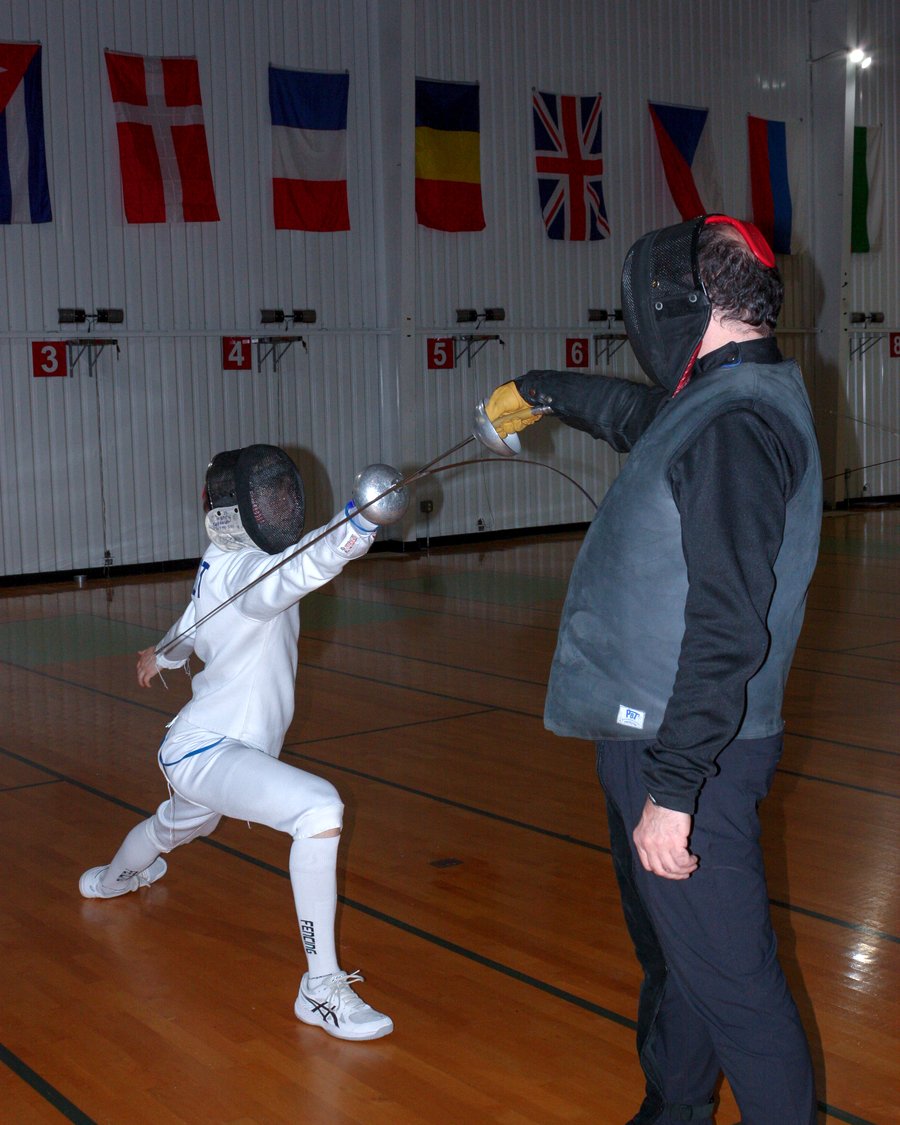
A young fencer taking an individual lesson from the coach
Individual lessons: one coach, one fencer, complete attention.

What age can they start — and is it too late?

We take fencers from age six. Six to eight is about play, coordination and learning to hold a blade safely; the real technical work begins around nine or ten.

There is no upper limit. Teenagers who start at fourteen can still reach a high level, and our adult fencers include people who picked up a blade for the first time in their forties and fifties. Fencing is a sport people keep doing — it is common to see three generations on the strips in one evening.

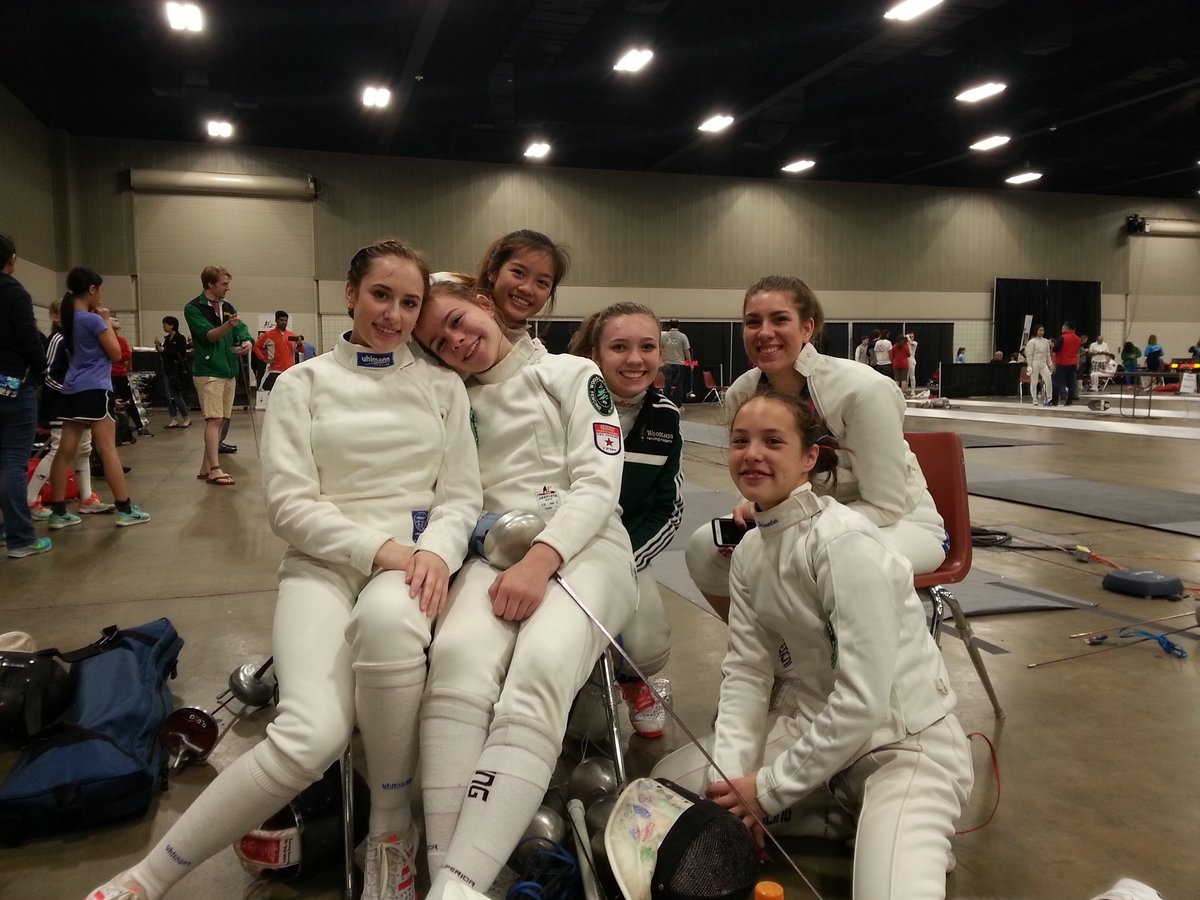
Two fencers talking after a bout at the salle
Club fencers at a national tournament — opponents on the strip, friends off it.

Do we need to buy equipment?

No — and please don't. The club provides masks, jackets, gloves, blades and electric equipment for every fencer, and that is included in tuition. Your child can train for months without you buying anything.

Families usually buy their own kit only when a fencer starts competing regularly, and by then you will know it is worth it. When that day comes, we will tell you exactly what to buy and what to skip — the difference is several hundred dollars.

For a first lesson: athletic clothes, long socks and sneakers. Nothing else.

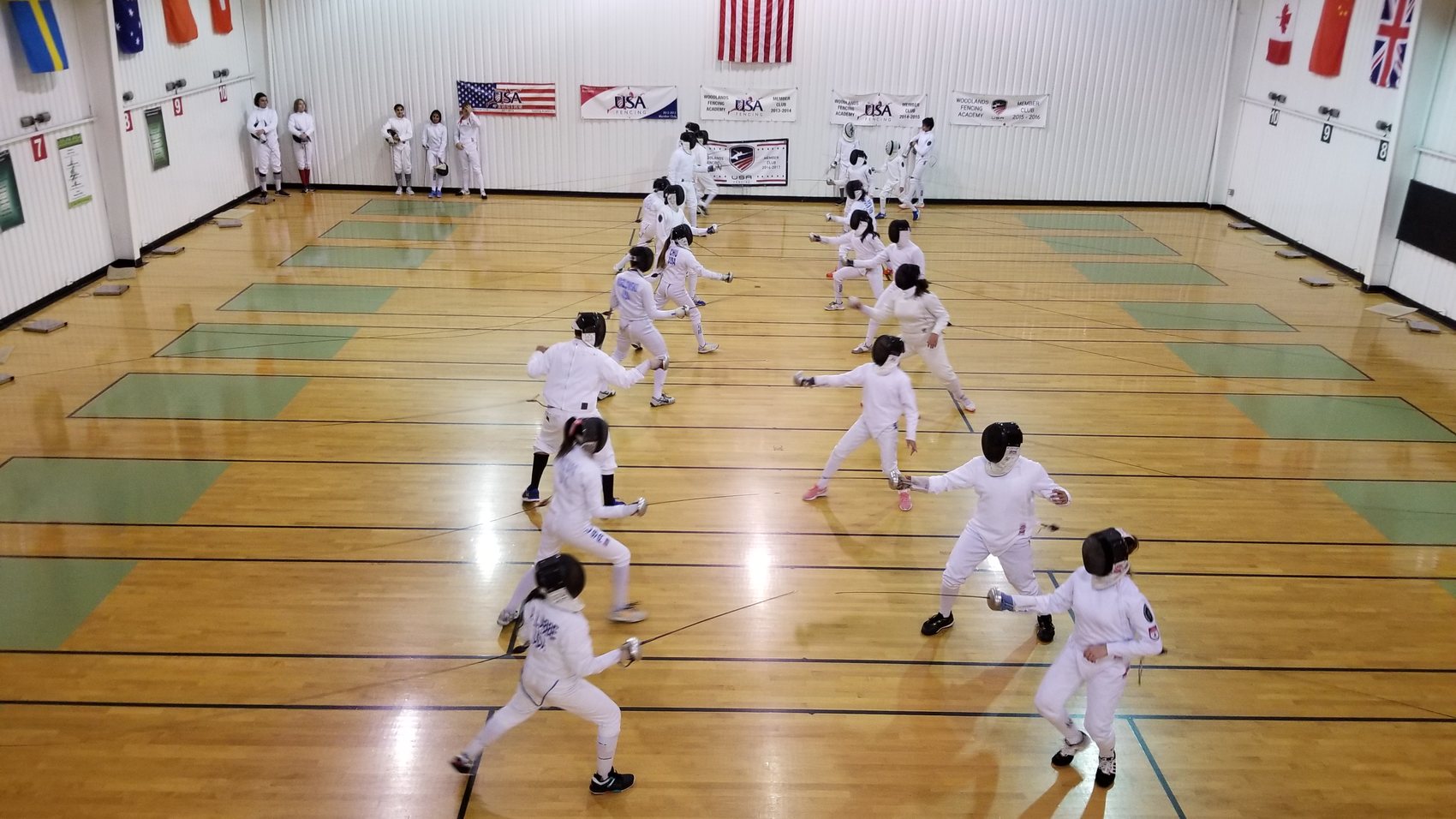
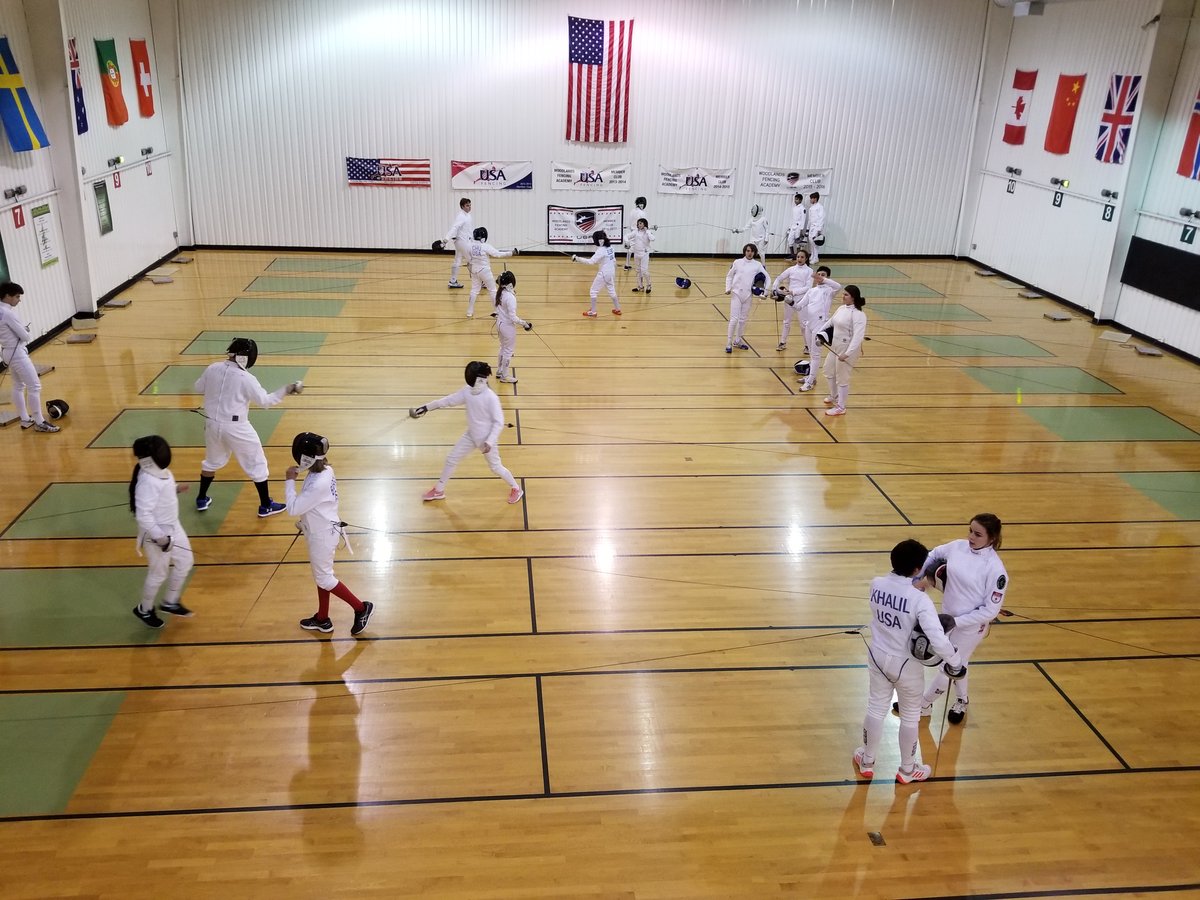
The salle during a training session
Club equipment is maintained in our own armory.

What does it actually cost?

Fencing has a reputation for expense. In practice it sits alongside the other activities Woodlands families already run — and below competitive club sports once travel is counted.

Getting started
Assessment lesson — 45 minutes with the coachFree
Youth Group — 3 sessions per week$245 / month
Safety & Etiquette course — 4 classes in groups of 3, during month one$135 one-time
Equipment — masks, jackets, gloves, bladesIncluded
Annual enrollment & armory fee — USA Fencing membership, insurance, club equipment$250 / year

Every new member completes the Safety & Etiquette course during their first month — four classes in groups of no more than three, required to continue into month two. Competing is optional and adds tournament entry fees ($50 regional, $100 national) only for the fencers who choose that path. Full tuition for every program is listed on the Programs page — we publish our prices because you should be able to plan.

What happens at the first lesson?

The assessment lesson is a real lesson, not a tour. Loaner gear is laid out before you arrive. Your fencer learns to stand, to advance and retreat, to salute, and to make a first extension — and then, before the forty-five minutes are up, scores a real touch on electric scoring equipment. The light goes on and the buzzer sounds. That is the part they talk about at dinner.

Afterwards the coach spends five minutes with you: what he saw in your child, which group he would start them in, and — if it comes to it — whether he thinks fencing is right for them at all. We would rather tell you honestly than enroll a child who will not enjoy it.

Parents are welcome to watch from the side of the strip throughout.

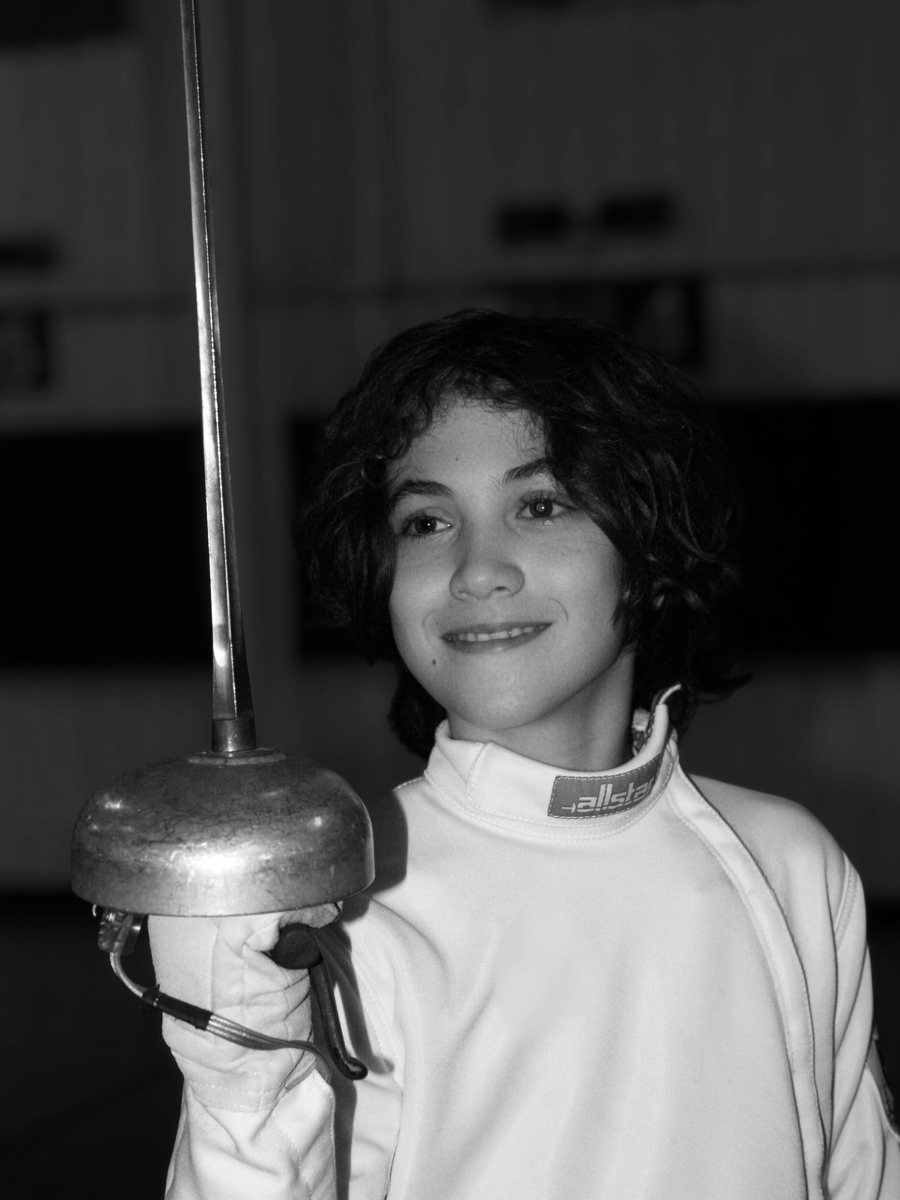
A young fencer at the salle
Every fencer here started with a first lesson.

Still have a question?

Call the salle and speak to the coach directly. Most parents' questions take about three minutes — and there is no obligation at the end of them.

Book an Assessment Lesson (346) 459-0186
Book an Assessment Lesson
Draft — Razumia