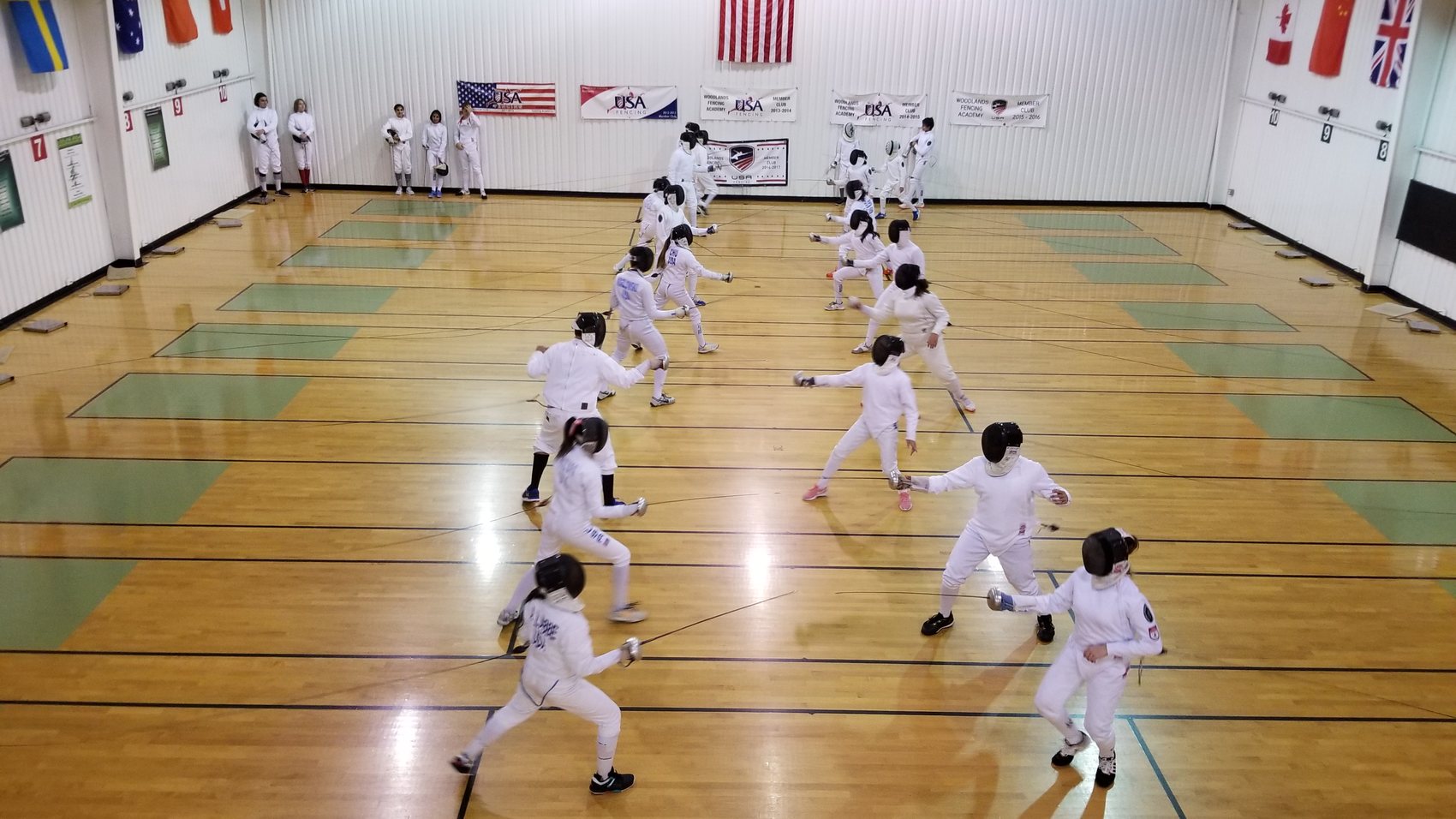
For centuries a fencer learned inside a salle d'armes — a hall of arms — under a master, who had learned from his own master before him. The technique, the discipline and the manners of the sport passed hand to hand down that line. In The Woodlands, that line is unbroken, and it runs three generations deep.
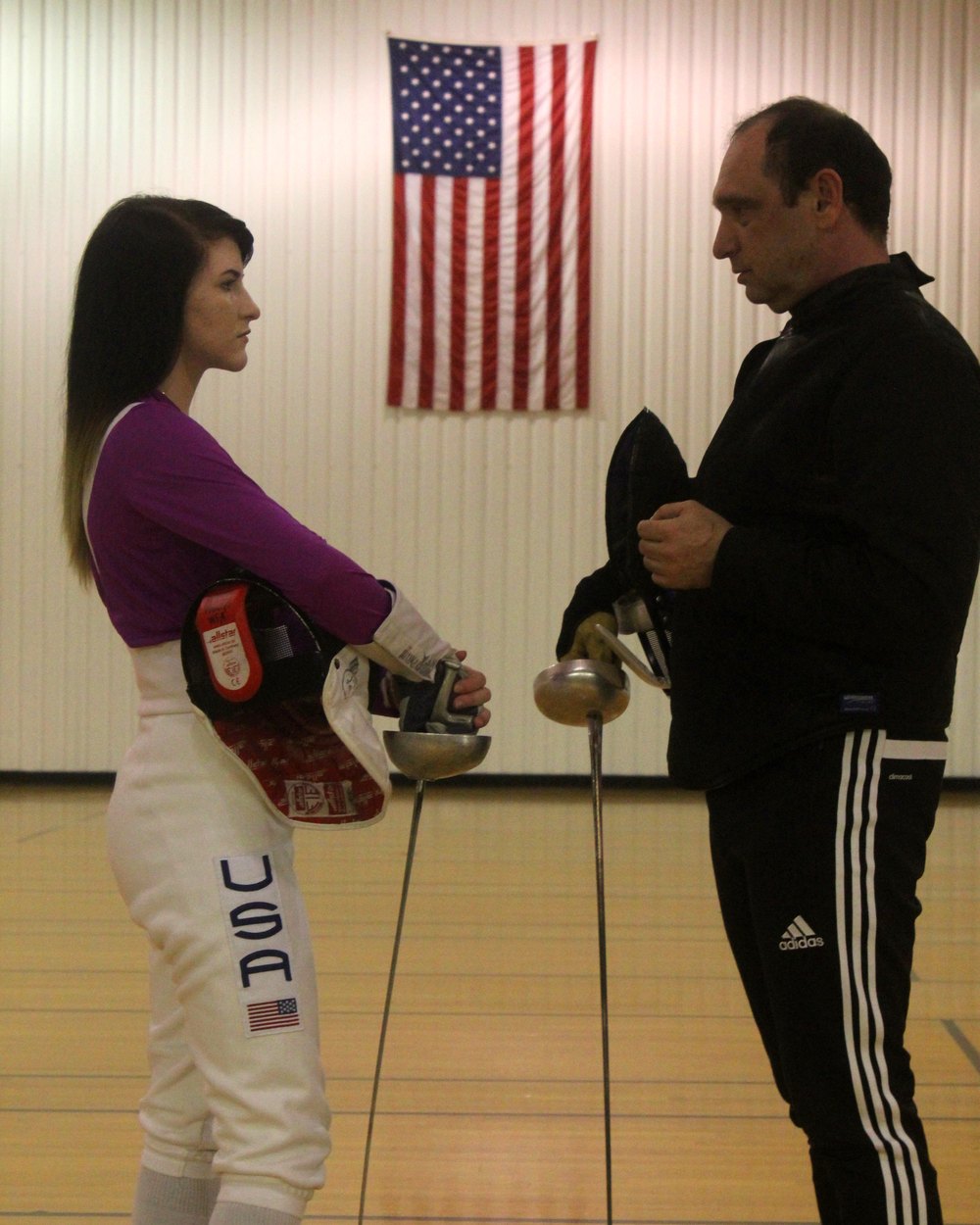
Our head coach did not learn fencing from a manual. He learned it from an Olympic medalist — who happened to be his father.
A Soviet fencing master and coach, and the teacher of Georgi Zazhitskiy. The beginning of the line that reaches our strip today.
Soviet épée fencer for Dynamo. World Champion with the USSR team in Havana, 1969. Olympic bronze medalist in the team event, Munich 1972. Three-time European Cup winner. Later head coach of the Estonian épée team.
Took up the blade in 1978 under his father's instruction. National champion, international competitor, and for more than fifteen years the master of this salle in The Woodlands.
Every child who takes a first lesson here is handed something that began long before this building existed.
The classical method begins with the feet. Before a beginner is allowed to think about scoring, they learn to stand, to advance, to retreat, and to hold the blade correctly — because everything a fencer will ever do rests on those first weeks. It is unglamorous, and it is why our fencers still look like fencers ten years later.
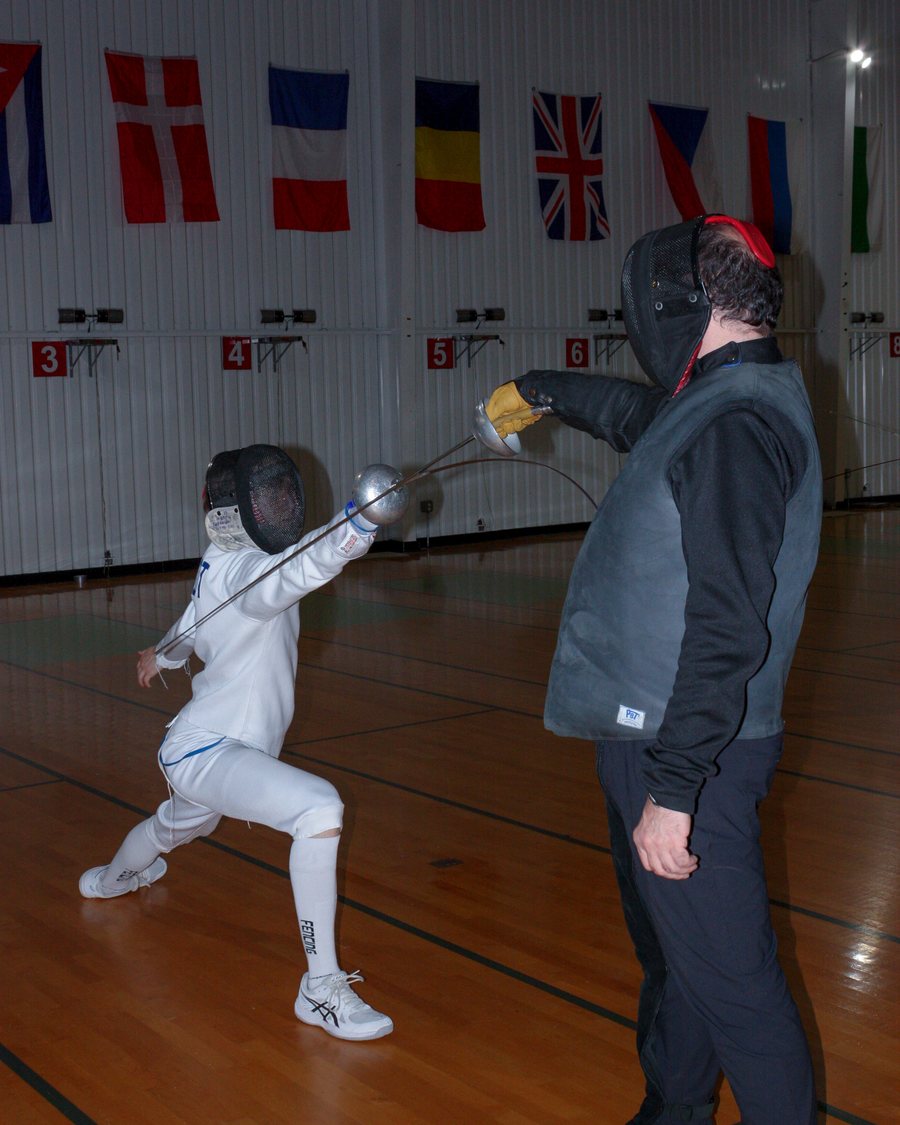
Then comes the individual lesson: coach and student alone on the strip, blade against blade. This is the heart of the European tradition and it cannot be delivered to a crowded room. It is where a coach learns what a particular child is made of, and where a child learns that someone is paying complete attention.
And the salute. Every bout begins and ends with it — to the opponent, to the referee, to the room. We are strict about it, because a sport practiced with a blade in hand should teach respect before anything else.
[Coach's own words on what he looks for in a young fencer — to be captured in his voice.] — Khariton Zazhitskiy
Since 2009, fencers trained in this salle have reached the levels below. Some came to us as complete beginners at seven years old.
Students selected to represent the United States at junior international level.
Fencers who went on to compete — and win — in collegiate fencing.
Medalists at the national circuit that determines U.S. rankings.
Medalists at the USA Fencing Junior Olympic Championships.
The best way to understand any salle is to stand in it. An assessment lesson is forty-five minutes with the coach — and an honest conversation afterwards about your child.
Book an Assessment Lesson The College Pathway